

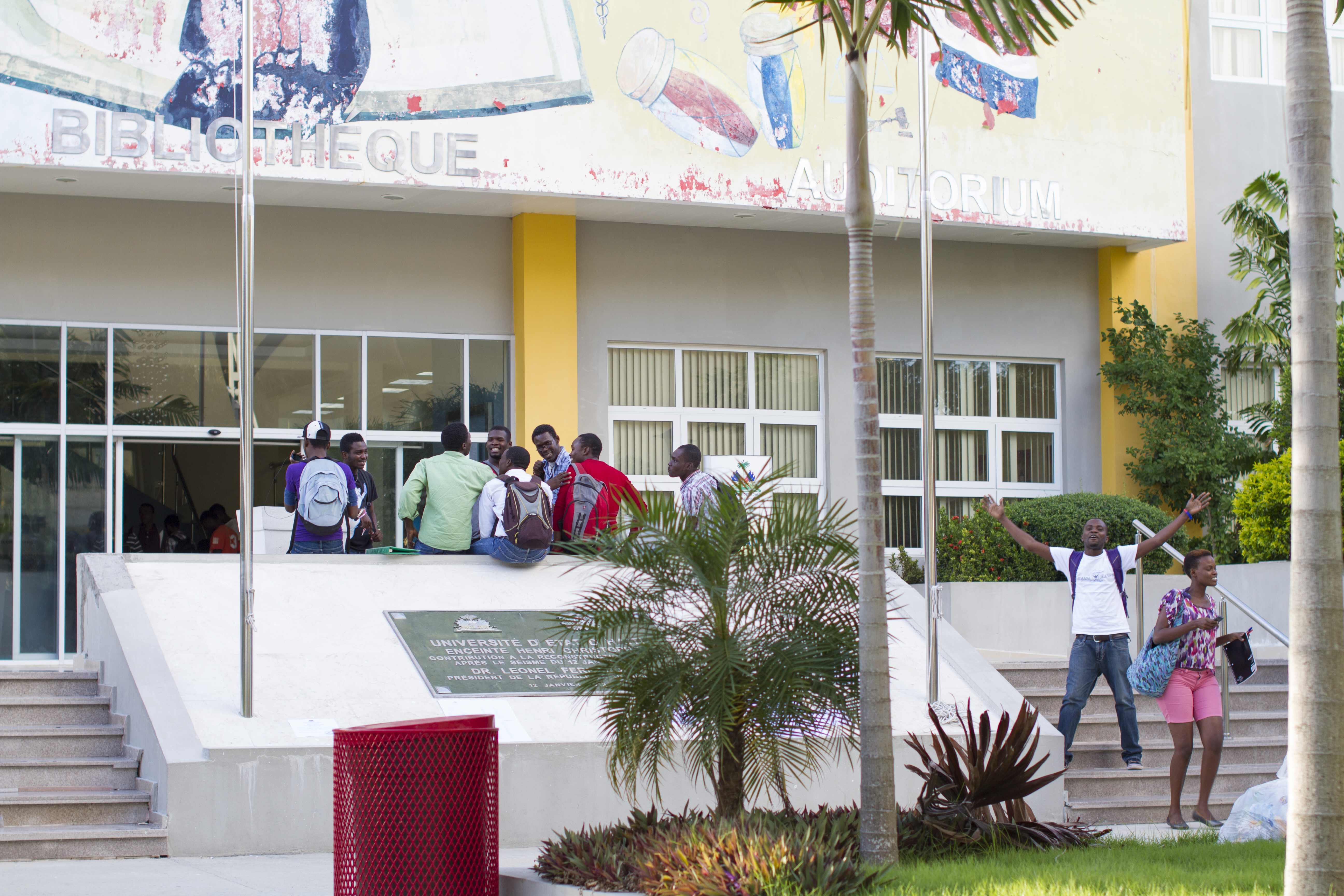
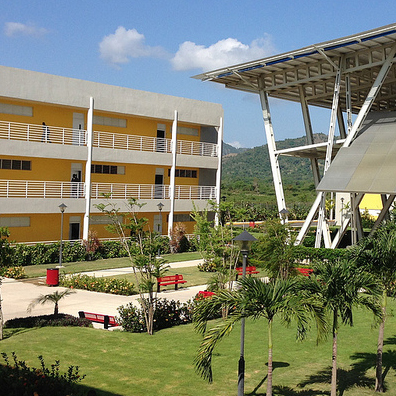
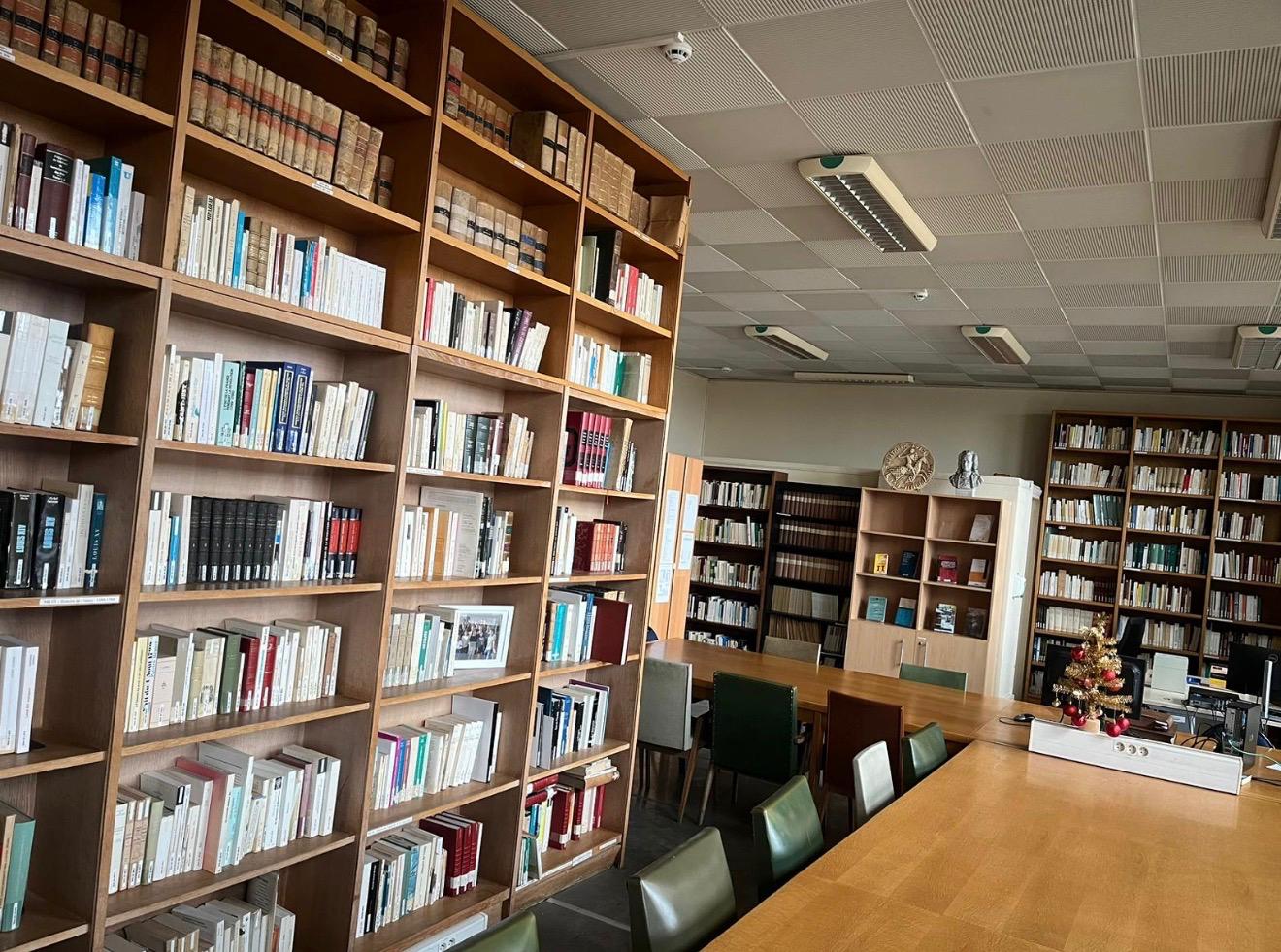
Bienvenue à la E-Bibliothèque de l’UEH

Des milliers de ressources en ligne au Bénéfice de la communauté universitaire

Image de Google Jackets
Image d'OpenLibrary

Navigating the Archival Archipelago : Politics of Record-Keeping at the ICRC (International Committee of the Red Cross) / Sanjna Girish Yechareddy.

Par : Langue : Anglais Détails de publication : Genève : Graduate Institute Publications, 2025.ISBN :
  • 978-2-940600-61-8
Sujet(s) : Ressources en ligne : Abrégé : How should we understand the politics and practice of record-keeping in a humanitarian institution? What institutional dynamics does the operation of an archive reflect? Disrupting the assumption that archives are static spaces, this paper explores how archives (defined as both the site and material) are entangled in the operations of the International Committee of the Red Cross (ICRC). By attempting to analyse the archive as an entity through sources it holds about its creation, interviews with archivists and staff at the ICRC and observation in archival spaces, this paper illustrates the possibilities of an ethnographic approach to archival politics. By reconstructing the history of the archives through the imprints of archival labour, the ICRC’s archives are conceptualised as an archipelago - with the boundaries of its constitutive islands constantly shifting. By navigating through the archipelago, we see competing institutional concerns unfold within and between the islands. First, the ICRC’s confidential approach and its implications for record-keeping are explored through the emergence of ‘archival anxieties’ – shifting from archivist to researcher. In contrast, the imperative force of communication on the circulation of photographs within the archive islands is examined. Through this ethnographic and historical exploration of the archival archipelago, one can see the implications for ongoing debates about institutional memory and history which unfold beyondthe ICRC. These dilemmas continueto have implications for the state of flux within the archival archipelago, attempting to stay afloat in the age of compounding humanitarian crises.We extend our heartfelt thanks to the Vahabzadeh Foundation for financially supporting the publication of best works by young researchers of the Graduate Institute, giving a priority to those who have been awarded academic prizes for their master’s dissertations.
Type de document :
Tags de cette bibliothèque : Pas de tags pour ce titre. Connectez-vous pour ajouter des tags.
Evaluations
    Classement moyen : 0.0 (0 votes)
Nous n'avons pas d'exemplaire de ce document

Ebook

How should we understand the politics and practice of record-keeping in a humanitarian institution? What institutional dynamics does the operation of an archive reflect? Disrupting the assumption that archives are static spaces, this paper explores how archives (defined as both the site and material) are entangled in the operations of the International Committee of the Red Cross (ICRC). By attempting to analyse the archive as an entity through sources it holds about its creation, interviews with archivists and staff at the ICRC and observation in archival spaces, this paper illustrates the possibilities of an ethnographic approach to archival politics. By reconstructing the history of the archives through the imprints of archival labour, the ICRC’s archives are conceptualised as an archipelago - with the boundaries of its constitutive islands constantly shifting. By navigating through the archipelago, we see competing institutional concerns unfold within and between the islands. First, the ICRC’s confidential approach and its implications for record-keeping are explored through the emergence of ‘archival anxieties’ – shifting from archivist to researcher. In contrast, the imperative force of communication on the circulation of photographs within the archive islands is examined. Through this ethnographic and historical exploration of the archival archipelago, one can see the implications for ongoing debates about institutional memory and history which unfold beyondthe ICRC. These dilemmas continueto have implications for the state of flux within the archival archipelago, attempting to stay afloat in the age of compounding humanitarian crises.We extend our heartfelt thanks to the Vahabzadeh Foundation for financially supporting the publication of best works by young researchers of the Graduate Institute, giving a priority to those who have been awarded academic prizes for their master’s dissertations.

CC-BY-NC-ND-4.0

https://creativecommons.org/licenses/by-nc-nd/4.0/

Il n'y a pas de commentaire pour ce titre.

pour proposer un commentaire.
Partager

Bibliothèque universitaire de l'UEH
Portail centralisé donnant accès au catalogue, aux ressources numériques et aux productions scientifiques de l’Université d’État d’Haïti.

Plateformes institutionnelles

  • Dépôt institutionnel UEH
  • Revues scientifiques UEH
  • GED institutionnelle
  • UEH enseignement à distance

Contact

  • Adresse : 21 Rue Rivière, Port-au-Prince
  • Email : bibliotheque@ueh.edu.ht
  • Téléphone : +509 22-45-68-43 / 22-45-68-44
  • Heures : Lundi–Vendredi 8h–16h
© 2026 UEH – E-Bibliothèque de l’Université d’État d’Haïti | À propos | Confidentialité | Conditions | Mentions légales | Accessibilité | Plan du site | Contact
-